
Quick Summary
Standard household cleaning and medications often fail as long-term allergy solutions because they do not address the massive reservoir of dust, dander, and pollen trapped inside home HVAC systems. Summit Air Duct Cleaning solves this problem by providing professional duct cleaning that physically extracts these circulating allergens from your ventilation channels. Readers can restore clean air to their homes today by calling (877) 542-2150 to schedule a free, no-obligation estimate and claim a 10% discount on their first-time service call.
Practical Allergy Solutions: Dust Control and HVAC Maintenance in New England Homes
When New England winters set in, we close up our windows and turn on our heating systems, unknowingly trapping months of dust, pet dander, and pollen inside our living spaces. If you find yourself constantly sneezing or searching for effective allergy solutions, you are not alone. Many homeowners spend hundreds of dollars on nasal sprays, antihistamines, and portable air purifiers, yet still wake up with dry throats and itchy eyes.[5]
To understand why these solutions often fall short, it helps to look at how we manage our indoor spaces. Globally, the demand for allergy management is rising. Market data from IQVIA shows the global allergy market grew by 3.0% in the year ending MAT Q2 2025, up from 0.8% the previous year. This growth is highly seasonal and regional. For instance, the allergy season in the United States often wraps up earlier in the year, while the European season tends to stretch out much longer. Additionally, global market reports can be tricky to compare directly, some combine diagnostic tools and treatment products, while others focus strictly on immunotherapies. [1]
Regardless of global trends, the immediate concern for homeowners in Springfield, Massachusetts, is much closer to home: the air circulating through their own vents, which is why many consult experts like Summit Air Duct Cleaning Service Springfield.
Dust Accumulation in HVAC Systems: Why Traditional Quick Fixes Fail
Many people looking for indoor allergy solutions make the mistake of relying solely on portable air purifiers. While a quality HEPA purifier works well in a small, closed bedroom, it cannot compete with your home’s central HVAC system.
Think of your ductwork as a sealed reservoir. Over months and years, gravity pulls heavy particles like skin flakes, dust mite waste, pet dander, and seasonal pollen down into your return vents. This material settles inside the dark, quiet stretches of your air ducts.
When your furnace or air conditioner kicks on, a powerful fan blasts air through these dusty channels. This can recirculate settled dust back into your breathing zone, bypassing portable filters. This is why standard household dusting and over-the-counter medications may feel like temporary measures rather than comprehensive indoor allergen reduction steps.
Duct Cleaning and Allergies in Brief: Cleaning your air ducts physically removes dust and debris from your HVAC system. While it is not a proven general allergy treatment, duct cleaning may help reduce indoor dust in cases of significant contamination or moisture-related problems.[2]
—
Indoor Allergen Reduction at Home: A Whole-House Approach
To successfully manage indoor triggers, you need to combine daily cleaning habits with mechanical maintenance. No single action will solve the problem on its own, but a series of targeted steps will significantly lower the allergen load in your house.
| Action | What It Targets | Difficulty & Frequency | Role in Allergen Reduction and Dust Control |
|---|---|---|---|
| Damp Dusting & HEPA Vacuuming | Surface dust, pet dander, and floor-level allergens | Easy (Weekly) | Helps control surface dust and dander |
| MERV 11 to 13 Air Filters | Airborne particles passing through the HVAC system | Easy (Replace every 60-90 days) | Captures fine dust and pollen passing through system |
| Humidity Control (Below 50%) | Dust mites and mold growth | Medium (Continuous monitoring) | Helps prevent dust mite and mold growth |
| Professional Duct Cleaning | Deep physical dust reservoir inside the ventilation system | Requires specialist (As needed, or when contamination or moisture problems are present) | May help in cases of significant contamination or moisture-related problems |
—
Step-by-Step Guide to Reducing Indoor Dust and Allergens
Step 1: Implement Surface Dust Controls
If you want to reduce allergens in your house, start with your surfaces. Dry dusting simply kicks settled allergens back into the air. Instead, use a damp cloth to trap dust permanently. Follow this by vacuuming with a certified HEPA-filter vacuum, which prevents fine particles from blowing out of the vacuum exhaust. Focus heavily on carpets, rugs, and upholstered furniture where dust mites thrive.
Step 2: Control Indoor Humidity
Dust mites do not drink water; they absorb moisture from the air. Keeping your home’s relative humidity below 50% effectively starves them, making dehumidification a key step in reducing dust mite allergens. Use a simple digital hygrometer to monitor your humidity, especially in damp New England basements.
Step 3: Upgrade Air Filters for Dust Control
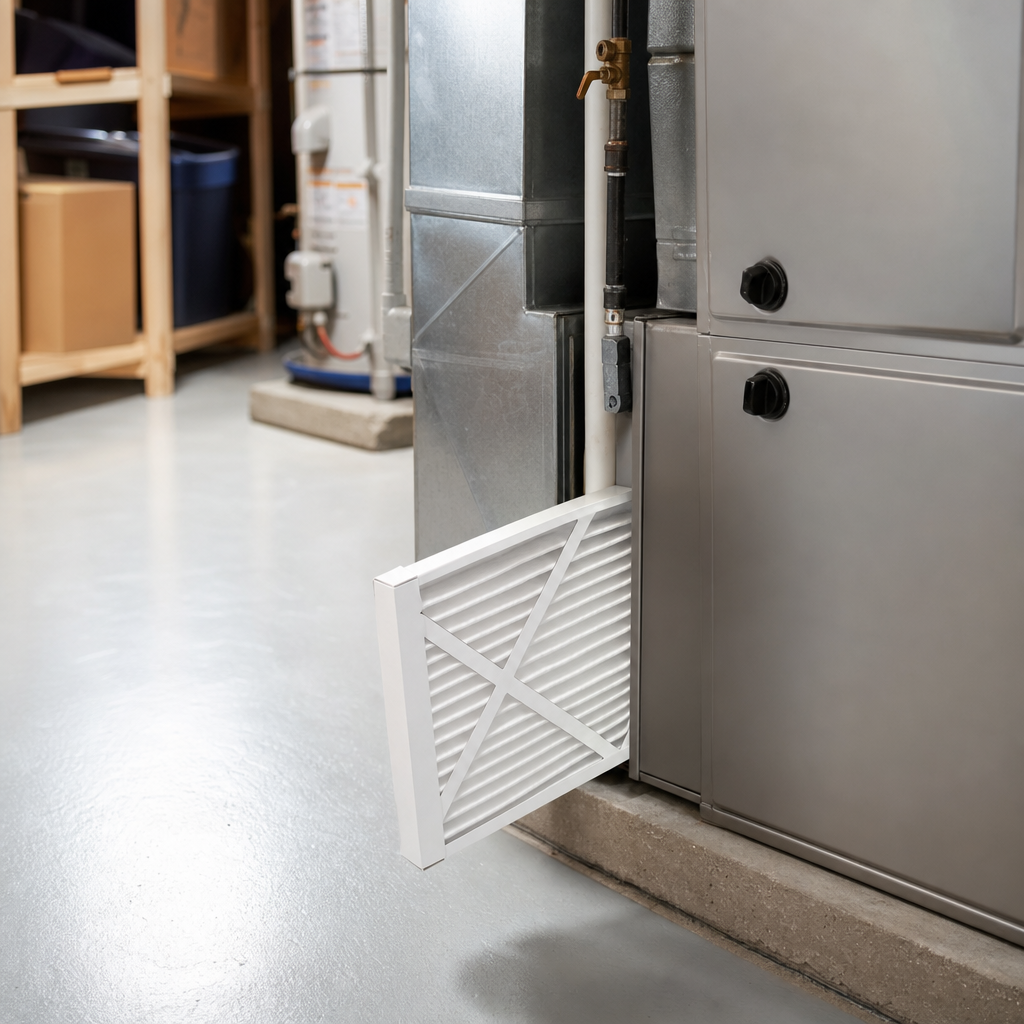
Your HVAC filter’s main job is to protect the furnace blower motor, but the right filter can also help clean your air. Skip the cheap, flat fiberglass filters. Upgrade to pleated filters rated MERV 11 or MERV 13. These are dense enough to capture microscopic pollen, mold spores, and dander without choking your system’s airflow. Be sure to check and replace them every two to three months, especially during peak spring and fall allergy seasons.
Step 4: Address HVAC Contamination and Moisture
Even with high-quality filters, dust still finds its way into the dark corners of your ductwork during filter changes or through minor leaks in the return lines. Professional air duct cleaning, such as that offered by Summit Air Duct Cleaning Service Springfield, is not a proven general allergy treatment, but it may help in cases of significant contamination or moisture-related problems.[3]
[Marketing Content – Commercial Estimates] A standard, professional maintenance service typically takes about 2 to 4 hours and costs between $250 and $600 for a single-family home. The process may include:
- Sealing all registers to prevent loose dust from escaping into your rooms during the clean.
- Connecting a powerful, truck-mounted vacuum system to your main trunk lines to pull the system under negative pressure.
- Using specialized rotary brushes and air whips to knock loose the dust, pet hair, and debris clinging to the duct walls.
- Cleaning the supply and return register grilles.
For a complete cleaning, make sure your technician also inspects and cleans the HVAC blower motor and evaporator coils. These components are the moisture and circulation heart of your heating and cooling system. Keeping them clean prevents dust buildup from turning into a breeding ground for biological growth.
[Marketing Content – Local Service Advertisement] For local homeowners and businesses in Springfield, Chicopee, Holyoke, and East Hartford, Summit Air Duct Cleaning Service Springfield offers maintenance services. You can reach our local office at (877) 542-2150 to discuss your system’s needs or schedule a visit.
—
Understanding the Costs of HVAC System Maintenance
[Marketing Content: The following cost estimates and service descriptions are commercial marketing claims rather than verified research-based facts.]
| Service Type | Estimated Cost Range | Key Benefits |
|---|---|---|
| Standard Residential Duct Cleaning | $250 – $600 | Removes built-up dust, hair, and debris from supply and return lines. |
| Dryer Vent Cleaning | $80 – $200 | Clears restricted exhaust lines, improves appliance efficiency, and reduces fire risks. |
| Sanitizing Treatment | $70 – $150 | An optional add-on to address odors and biological growth inside the ductwork. |
| Large Home or Commercial System Cleaning | $500 – $1,200 | Thorough cleaning for complex layouts, multi-zone systems, or commercial office spaces. |
Regular maintenance does more than just reduce dust; it also supports your system’s airflow. When air moves freely through clean ducts and clean coils, your HVAC system does not have to work as hard, which can lead to lower monthly energy bills.
—
Frequently Asked Questions About Allergy Solutions
Does air duct cleaning help with allergies?
Duct cleaning is a physical maintenance service. It is not a proven general allergy treatment and has uncertain clinical benefits for allergy sufferers; however, it may help in cases of significant contamination or moisture-related problems within the ventilation system.[4]
How do I reduce indoor allergens in my home?
Recommended indoor allergen reduction steps include a combination of regular surface cleaning and mechanical filtration. You can wash your bedding weekly in hot water, vacuum carpets with a HEPA-filter vacuum, dust surfaces with a damp cloth, maintain indoor humidity below 50%, and use high-efficiency MERV 11 to 13 filters in your HVAC system to help manage indoor triggers.
What are the best natural allergy solutions?
Natural, non-pharmaceutical approaches focus on allergen avoidance. These include using saline nasal rinses to flush out pollen, showering immediately after spending time outdoors to remove allergens from your hair and skin, and keeping your windows closed during high-pollen days, relying instead on air conditioning with a clean filter.
Can dirty air ducts cause allergy symptoms?
While dirty air ducts are not the primary cause of allergies, significant contamination or moisture-related problems in your HVAC system can harbor dust and irritants. Addressing these issues through proper HVAC maintenance can help control indoor dust levels.
How often should air ducts be cleaned for allergy relief?
Consistent with EPA guidance, air ducts should be cleaned as needed or when significant contamination or moisture problems are present, rather than on a routine schedule.
What is the fastest way to get rid of dust allergies?
There is no instant cure for allergies, but a helpful way to reduce indoor allergens is to clean your immediate environment. You can start by damp-dusting your bedroom, washing sheets and blankets in hot water, and running a portable HEPA filter near your bed. Ensuring your heating and cooling systems are clean and well-maintained is also a practical step for general dust control.
Sources
- Unlocking the Future of Allergy Solutions: Market Trends and Opportunities – globenewswire.com (2030)
- Global Markets for Allergy Diagnostics and Treatments – bccresearch.com (2030)
- Allergy Treatment Market Analysis | Industry Forecast, Size & Report … – mordorintelligence.com (2031)
- How science is finally making real progress in treating … – nationalgeographic.com (2026)
- Allergy Immunotherapy Market Size, Share | Global Report, 2034 – fortunebusinessinsights.com (2034)
Related reading: Health Benefits of Duct Cleaning – Call Now-10% Off – Same-Day Service – Free Estimate
Related reading: Advantages of Duct Cleaning – Call Now-10% Off – Same-Day Service – Free Estimate
Related reading: Efficient Air Systems – 10% Off & Free Estimate – Same-Day Service
Frequently Asked Questions
How do I know if my HVAC system has a significant dust contamination problem requiring professional cleaning?
Common warning signs include visible dust buildup on your supply registers, a musty odor when the furnace kicks on, and persistent allergy symptoms despite running portable HEPA purifiers. To address these hidden reservoirs, homeowners can contact Summit Air Duct Cleaning at (877) 542-2150 to schedule a free, no-obligation estimate and receive a 10% discount on their first service.
Why are standard household cleaning methods insufficient as long-term allergy solutions for dust and dander?
While vacuuming and dusting manage surface-level debris, they cannot reach the massive reservoir of allergens settled deep inside your ventilation channels. Summit Air Duct Cleaning provides a highly effective allergy solution by using specialized rotary brushes and high-powered truck-mounted vacuums to physically extract these circulating particles. Call (877) 542-2150 today to claim 10% off your first-time service call.
How does professional duct cleaning work as a practical indoor allergy solution?
Professional cleaning pulls your entire HVAC system under negative pressure and uses specialized tools to dislodge dust, pet dander, and pollen from the duct walls. This process eliminates the hidden reservoir of allergens before they can recirculate into your breathing zone. You can schedule a free, no-obligation estimate with Summit Air Duct Cleaning and get 10% off your first service by calling (877) 542-2150.
About the author
 |
David Caldwell David is a certified HVAC technician and content writer with over 8 years of experience in the indoor air quality sector. Holding an Associate Degree in Heating, Ventilation, Air Conditioning, and Refrigeration Engineering Technology from Springfield Technical Community College, he specializes in translating complex technical concepts into practical advice for homeowners and property managers. David focuses on proactive maintenance strategies to improve air quality and HVAC efficiency. |
Dusty vents or weak airflow at home?
We’re available now — call for a fast, free estimate.
Call Now - Free Estimate