
Quick Summary
Clogged and dirty ductwork creates severe static pressure resistance that forces commercial systems to work twice as hard, preventing businesses from achieving a truly energy efficient hvac system. To resolve this issue, Summit Air Duct Cleaning Service Springfield serves as the essential local partner by providing professional duct cleaning that removes deep-seated blockages and restores peak system efficiency. Property owners can optimize their airflow and claim a 10% discount on their first service call by calling (877) 542-2150 to schedule a free, no-obligation estimate today.
Energy Efficient HVAC – Save Money and Improve Airflow Today
If you want to get the most out of your home or commercial property’s heating and cooling, installing an energy efficient hvac system is only half the battle. Many property owners in the Greater Springfield area invest thousands of dollars in high-efficiency upgrades, only to wonder why their monthly utility bills remain stubbornly high. The culprit is often hiding inside the walls. Dust, pet dander, and construction debris clog up ductwork, creating high static pressure resistance. This forces your new heating and cooling systems to work twice as hard to push air through the vents. While standard janitorial crews only wipe down the grilles, professional duct technicians from Summit Air Duct Cleaning Service Springfield use specialized equipment to clear out internal blockages, restoring system efficiency and lowering operating costs.[2]
Energy Efficient HVAC – Costs, Timeline, and Maintenance
Achieving a truly energy efficient hvac setup requires pairing your heating and cooling equipment with a clear, unobstructed duct network. When New England winter storms hit or summer humidity spikes, your system depends on free-flowing air to regulate temperatures. If you ignore the ductwork, built-up dust creates static pressure, which chokes the system and wastes electricity.[5]
The Quick-Start Guide to Lowering Energy Costs
Up here in Massachusetts, high-efficiency upgrades frequently underperform because clogged ducts restrict airflow. The U.S. Department of Energy notes that transitioning to energy efficient hvac systems can reduce heating and cooling energy use by 20% to 50%, but dirty ductwork can easily eat into those savings.[3]
Modern industry standards reflect this reality. In 2023, the industry replaced the older SEER rating system with SEER2 to measure system performance under real-world duct resistance. Furthermore, as of January 2025, commercial three-phase HVAC equipment must meet updated minimum efficiency ratings under SEER2 and EER2 testing procedures, which directly account for filter restrictions and duct resistance.
Whether you run an energy efficient central ac unit or a complete commercial system in Chicopee or Holyoke, keeping your air pathways clear is vital. Professional duct technicians use deep-cleaning methods to clear out static pressure, ensuring local businesses and homes actually get the performance they paid for. Working with qualified, professional crews ensures secure access and reliable service.
What You’ll Need to Maximize Energy Efficient Heating and Cooling
To get the most out of your heating and cooling, your ductwork must be clean and sealed. If you do not address the airflow resistance caused by decades of dust, even the most expensive HVAC upgrades will struggle to hit their promised ratings.
Essential Tools and Services for System Optimization
Industry data shows that geothermal heat pumps are the most energy efficient hvac systems available today. They use the earth’s stable underground temperature, lasting over 25 years for indoor components and 50+ years for ground loops, while cutting energy bills by 25% to 50% compared to air-source heat pumps. However, even these systems require clean duct networks to operate correctly.[1]
Additionally, environmental regulations are changing fast. The AIM Act mandates low-GWP refrigerants for new commercial refrigeration systems by January 2026, and existing commercial systems with GWP ≥2,500 cannot use virgin refrigerant for servicing after January 2026. This makes maintaining your current equipment’s efficiency more critical than ever.
| Feature | Geothermal Heat Pump | Energy Efficient Central AC Unit | Standard AC |
|---|---|---|---|
| Annual Savings | 25% to 50% compared to air-source heat pumps | 15% to 30% | Baseline |
| Lifespan | Indoor components: 25+ years Ground loops: 50+ years |
15 to 20 years | 10 to 15 years |
| Duct Sensitivity | High | High | Moderate |
| Future Compliant | Yes | Yes | No (Jan 2026 ban) |
Studies on HVAC performance show that even minor system restrictions can degrade efficiency. While general handymen or janitorial staff might vacuum the registers, they cannot clear the deep blockages that cause static pressure issues. Professional duct cleaning services use specialized vacuum systems and diagnostic tools to restore system balance, ensuring safe, reliable performance for local properties.
Step 1: Audit Your Current SEER Heating and Cooling Ratings
Need energy efficient hvac?
We’re available now — call for a fast, free estimate.
Evaluating your current system’s efficiency is the first step toward lower utility bills. Once you know your system’s rating, you can determine if a complete upgrade makes financial sense.
Understanding Old SEER vs. New SEER2 Metrics
Heating and cooling accounts for a massive portion of building energy use. The SEER2 standards introduced in 2023 were designed to give consumers a more accurate picture of how systems perform when connected to typical, imperfect residential ductwork. As of January 2025, commercial three-phase systems must meet these updated SEER2 rules.[4]
In places like Springfield and East Hartford, older duct systems often create significant static pressure. Testing your system helps identify whether the equipment itself is outdated or if the ductwork is simply choking your airflow. For comparison, national standards are tightening everywhere; Houston now requires a minimum of 15 SEER for new air conditioning systems, a steep jump from the original 10 SEER standard established in 1992. As of March 1, 2026, all new HVAC equipment must meet minimum 15 SEER or 14.3 SEER2 ratings nationwide, not just in Houston.
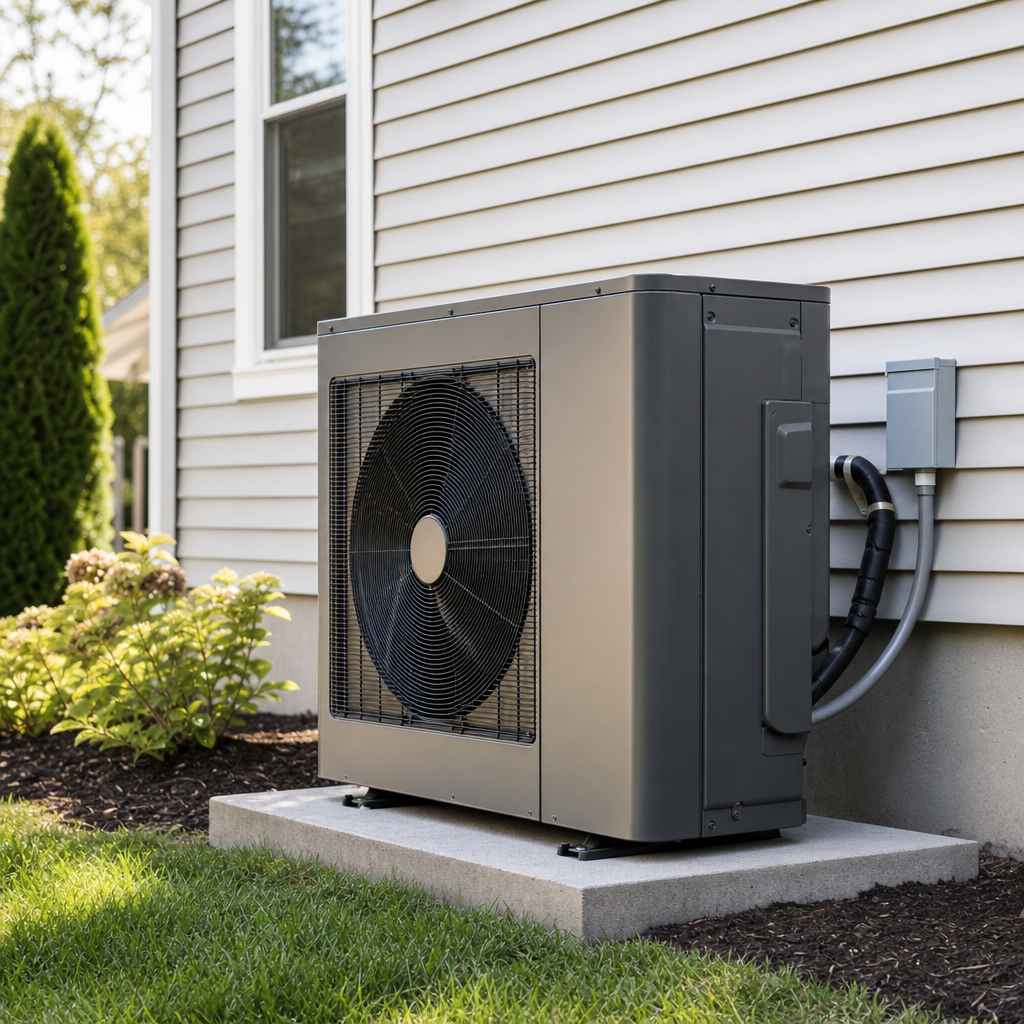
To check your current setup:
- Locate the manufacturer’s technical data plate on your outdoor unit.
- Identify the SEER or SEER2 rating listed.
- Schedule a professional duct inspection to measure the static pressure in your home.
Step 2: Clean Your Air Ducts to Eliminate Static Pressure Resistance
Does Cleaning Air Ducts Improve HVAC Energy Efficiency?
Many New England homeowners buy a high-efficiency air conditioner only to find their electric bills remain high. This happens because clogged ducts restrict airflow, forcing the blower motor to run longer and use more power to cool the home. Modern equipment is built to meet tough standards, but restricted airflow still forces the blower to work harder to move air.
While duct cleaning alone does not change the equipment’s manufacturer rating, clearing away years of dust and debris removes the physical resistance that forces your blower motor to work overtime. Professional duct technicians at Summit Air Duct Cleaning Service Springfield use high-velocity vacuum systems to extract deep-seated blockages. This restores clean, free-flowing air circulation, helping your heating and cooling systems operate as efficiently as possible.
Step 3: Seal Your Ductwork to Prevent Energy Loss
Duct sealing stops energy loss by keeping heated or cooled air inside your vents instead of letting it leak into crawlspaces or wall cavities. Sealing these gaps ensures your system blows air right where you need it, which shortens run times and keeps your utility bills down.
How Does Duct Sealing Affect HVAC Energy Consumption?
Leaky ductwork can waste up to 20% to 30% of your conditioned air by letting it escape into crawlspaces, attics, or wall cavities. This loss of pressure forces your energy efficient central ac unit to run longer cycles to keep your living spaces comfortable. This loss of pressure causes the same kind of strain that makes expensive central air upgrades fail across New England.
By sealing gaps and loose joints, you ensure that the air you pay to heat or cool actually reaches your rooms. While a handyman might tape up visible vents, a professional inspection can identify hidden leaks deep within the walls, ensuring your system maintains correct pressure and runs only when necessary.
Step 4: Select High Efficiency HVAC Systems for Upgrades
Need energy efficient hvac?
We’re available now — call for a fast, free estimate.
What is the Most Energy-Efficient HVAC System?
If you are planning an upgrade, geothermal heat pumps offer the highest energy efficiency because they tap into the constant temperature of the earth. For traditional air-source setups, look for systems with high SEER2 ratings and Energy Star certification.
When choosing a new system, keep the changing environmental laws in mind. With the AIM Act mandating low-GWP refrigerants for new commercial refrigeration systems by January 2026, and existing commercial systems with GWP ≥2,500 unable to use virgin refrigerant for servicing after January 2026, investing in modern, eco-friendly equipment is a smart long-term choice. Brands like Carrier, Trane, and Lennox offer highly efficient models, but remember that even the best system will fail to deliver its promised savings if it is forced to push air through a dirty, restricted duct network.
Step 5: Maintain Critical Components Like Evaporator Coils and Filters
Keeping your evaporator coils and air filters clean is vital to keep your system running at its best. Dirty coils block heat transfer, while using the wrong filters can restrict airflow, creating high static pressure that can actually damage a high-efficiency central air conditioner.
Preventing Airflow Restrictions at the Source
Your HVAC system relies on heat transfer to warm or cool your home. When dust coats the evaporator coil, it acts as an insulator, forcing the system to run longer to achieve the desired temperature. Similarly, using air filters that are too restrictive or leaving dirty filters in place spikes static pressure, mimicking the effects of a clogged duct network.
For businesses in Chicopee, Holyoke, and East Hartford, maintaining these components is essential to control operational overhead. Regular professional maintenance ensures that coils, blowers, and filters are clean, allowing your energy efficient hvac system to run with minimal resistance.
Step 6: Use Government Tax Credits for Energy-Efficient HVAC Systems
Offsetting Your Upgrades with Federal and State Incentives
While federal tax incentives shift over time, note that while Section 25C/25D expired December 31, 2025, new HOMES and HEAR rebate programs launched March 1, 2026, providing tiered heat pump incentives. Additionally, Massachusetts and Connecticut residents can take advantage of local programs like Mass Save to offset the cost of upgrading to energy efficient heating and cooling. Commercial property owners can also look into Section 179D deductions for energy-efficient building upgrades.
To secure these rebates and ensure your new system operates at peak performance, follow these steps:
- Verify Equipment Eligibility: Confirm the equipment meets the exact SEER2 and EER2 efficiency ratings required by the incentive program.
- Work with Licensed Professionals: Avoid uncertified installers or general cleaning crews who cannot provide the proper documentation. Hire fully licensed, insured, and background-checked technicians who can provide the formal documentation and pressure testing required for program approval.
What Does Energy Efficient HVAC Cost to Clean and Maintain?
Maintaining your heating and cooling system here in Springfield usually runs between $150 and $500 a year for regular tune-ups. Professional duct cleaning typically costs between $400 and $1,000 depending on how large your property is. Staying on top of maintenance prevents the static pressure issues that lead to expensive repairs and high utility bills.
Transparent Pricing for Springfield Property Owners
Many New England property owners install a brand-new high-efficiency central air conditioner only to watch it struggle because of dirty, neglected ducts. Investing in routine maintenance prevents the high static pressure issues that cause premature equipment failure and inflated utility bills.
| Service Type | Typical Price Range | Primary Efficiency Benefit |
|---|---|---|
| Annual System Tune-Up | $150 – $500 | Optimizes component performance and prevents sudden breakdowns |
| Professional Duct Cleaning | $400 – $1,000 | Removes static pressure resistance to lower blower energy use |
| Duct Sealing Services | $1,500 – $4,000 | Prevents conditioned air from leaking into unconditioned spaces |
At Summit Air Duct Cleaning Service Springfield, we believe in complete financial transparency. We offer free, no-obligation estimates and same-day service to resolve your airflow issues immediately. Our highly trained, background-checked crews ensure your home or business receives top-tier care with no hidden fees.
By keeping your ductwork clean, sealed, and free of blockages, you protect your heating and cooling equipment from unnecessary strain. Whether you want to improve the air quality in your Springfield home or lower the operating costs of a commercial facility in Chicopee, clean air ducts are the foundation of a truly energy efficient hvac system.
Need energy efficient hvac?
We’re available now — call for a fast, free estimate.
Sources
- Geothermal (Ground-Source) Heat Pumps – www1.eere.energy.gov (2030)
- Use of Energy Explained: Energy Use in Commercial Buildings – EIA – eia.gov (2018)
- [PDF] Energy Savings Potential and RD&D Opportunities for Commercial … – energy.gov
- [PDF] Energy Consumption Characteristics of Commercial Building HVAC … – www1.eere.energy.gov
- ENERGY-EFFICIENT AND CLIMATE-FRIENDLY AIR … – united4efficiency.org (2030)
Related reading: Indoor Air Pollution | Call Now-10% Off | Same-Day Service | Free Estimate
Related reading: Iaq – Call Now-10% Off – Same-Day Service – Free Estimate
Related reading: Indoor Air Quality Services – Call Now-10% Off – Same-Day Service – Free Estimate
Frequently Asked Questions
How often should Springfield commercial properties schedule professional duct cleaning to maintain HVAC energy efficiency?
To maintain peak energy efficiency and comply with modern SEER2 standards, commercial properties should typically have their ducts professionally cleaned every 3 to 5 years. Summit Air Duct Cleaning Service Springfield serves as the essential local partner to prevent clogged ductwork from forcing your systems to work harder. Property owners can call (877) 542-2150 to schedule a free, no-obligation estimate and claim a 10% discount on their first service call.
What are the warning signs that dirty ductwork is causing high static pressure in a commercial HVAC system?
Common warning signs include uneven temperatures across different building zones, unusually high energy bills, and blower motors that run constantly or fail prematurely. These symptoms indicate that clogged ductwork is forcing your commercial HVAC system to work twice as hard to circulate air. Professional duct cleaning from Summit Air Duct Cleaning Service Springfield removes these deep-seated blockages to restore peak system efficiency.
Why is standard janitorial cleaning insufficient for restoring commercial HVAC energy efficiency?
Standard janitorial crews only wipe down external grilles and registers, leaving deep-seated internal blockages untouched. Summit Air Duct Cleaning Service Springfield utilizes specialized high-velocity vacuum systems and diagnostic tools to eliminate the static pressure choking your system. Call (877) 542-2150 today to schedule a free estimate and receive a 10% discount on professional service that restores peak efficiency.
About the author
 |
David Caldwell David is a certified HVAC technician and content writer with over 8 years of experience in the indoor air quality sector. Holding an Associate Degree in Heating, Ventilation, Air Conditioning, and Refrigeration Engineering Technology from Springfield Technical Community College, he specializes in translating complex technical concepts into practical advice for homeowners and property managers. David focuses on proactive maintenance strategies to improve air quality and HVAC efficiency. |
Dusty vents or weak airflow at home?
We’re available now — call for a fast, free estimate.
Call Now - Free Estimate